GEOTECHNICAL ENGINEERING
CORK
HomeFoundationsPile foundation design

Pile Foundation Design in Cork: Geotechnical Engineering for Challenging Ground Conditions

Geotechnical engineering with regional judgment.

LEARN MORE

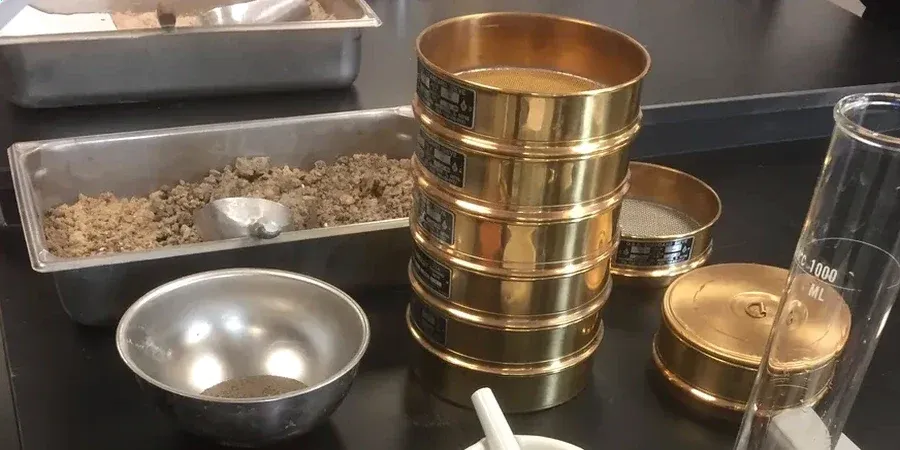
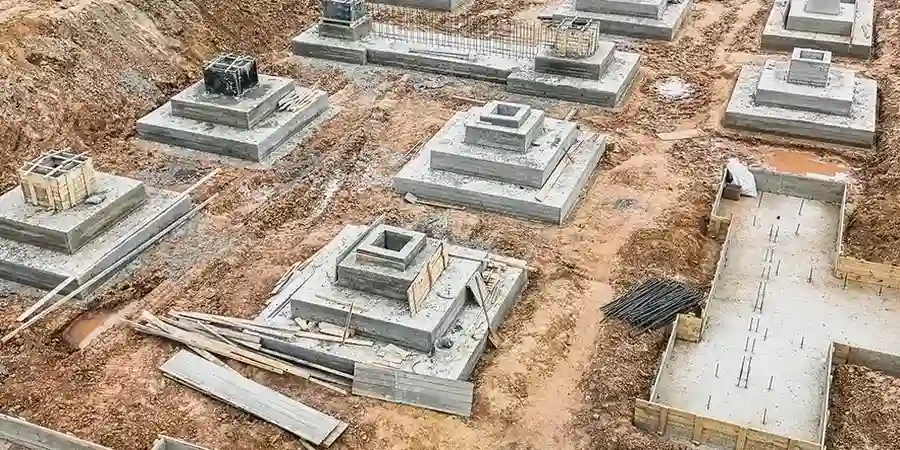
The ground beneath your feet in Cork can feel like two different worlds. Work near the River Lee's north channel and you might hit dense, jointed limestone within a few metres — ideal end-bearing strata but a challenge for conventional footings. Shift a kilometre south towards the Douglas estuary and the profile changes dramatically: metres of soft, silty alluvium and glacial till that compress under load, demanding a deep foundation approach from the outset. That contrast is what keeps pile design in Cork genuinely interesting. In our expertise, a single borehole isn't enough to capture that transition. We routinely combine site investigation with laboratory classification to map the buried rockhead accurately, because missing a low-strength interbedded layer by half a metre can alter the entire foundation concept. A CPT test pushed through the soft clays at the Marina gives us continuous tip resistance and pore pressure data, while deeper rotary drilling confirms the limestone quality. For projects near the historic quays, where made ground and buried timber cribwork complicate the profile, we often pair the CPT with a grain-size analysis of the estuarine deposits to assess drainage behaviour around the pile shaft during installation.

A pile is only as reliable as the ground model behind it. In Cork, where the rockhead can drop 15 metres across a single building footprint, that model is everything.
Our service areas

Our approach and scope

The damp, maritime climate of Cork plays a bigger role in pile behaviour than many engineers expect. Winter groundwater levels in the Lee valley can rise to within half a metre of ground surface, saturating the upper alluvial layers and reducing effective stress around the pile shaft. That seasonal fluctuation means a pile design finalised in August can behave differently in February, especially for friction piles in the soft silts. We account for this by running drained and undrained parameter sets through our models, and we often specify a triaxial test on undisturbed Shelby tube samples to capture the effective stress strength envelope of the critical layers. On sites where the bedrock profile is irregular — not uncommon near the western fringes of the city where the limestone has undergone dissolution — we may recommend a preliminary MASW survey to image the rockhead topography before committing to a piling layout. This avoids unpleasant surprises like finding a deep solution cavity directly beneath a heavily loaded column line. The data feeds directly into our pile group analysis, allowing us to vary pile lengths across the footprint rather than over-designing the entire foundation system.
Pile Foundation Design in Cork: Geotechnical Engineering for Challenging Ground Conditions
Technical reference — Cork

Site-specific factors

A crawler-mounted drill rig set up on a Cork city centre site, its rotary head spinning a temporary casing through made ground and gravel, is a familiar sight to anyone who has worked deep foundations here. But what you can't see from the surface is the risk that keeps the driller and the designer awake: encountering an undocumented underground stream or solution channel in the limestone. These karst features, common in the Cork syncline geology, can cause sudden loss of drilling fluid, rapid concrete loss during pile concreting, and — in the worst case — a pile with a void beneath its toe. We mitigate this by specifying casing through the overburden and into competent rock, and by monitoring concrete volume during placement against the theoretical pile volume. A deviation greater than 15% triggers an immediate hold and investigation. For sites with known karst activity, we also recommend pre-construction grouting to seal major fissures before piling starts, reducing the risk of fluid migration between adjacent piles during construction.

Need a geotechnical assessment?

Reply within 24h.

Email: contact@geotechnical-engineering.co

Video overview

Reference standards

I.S. EN 1997-1:2005 (Eurocode 7: Geotechnical design — General rules), I.S. EN 1997-2:2007 (Eurocode 7: Ground investigation and testing), I.S. EN 1992-1-1:2004 (Eurocode 2: Design of concrete structures), I.S. EN 12699:2015 (Execution of special geotechnical work — Displacement piles), I.S. EN 1536:2010+A1:2015 (Execution of special geotechnical work — Bored piles), Institution of Civil Engineers (ICE) Specification for Piling and Embedded Retaining Walls (SPERW)

Reference parameters

ParameterTypical value
Common pile diameters (bored)450 mm to 900 mm
Typical pile lengths (Lee valley alluvium)8 m to 25 m
Design standardI.S. EN 1997-1:2005 + Irish National Annex
Ground investigation depth (min.)5 m below pile toe or 3× pile diameter
Concrete strength class (bored piles)C30/37 minimum, tremie placed
Shaft friction verificationStatic load test or instrumented test pile
Rock socket length (limestone)Typically 1.5 to 3 pile diameters into competent rock

Quick answers

What does pile foundation design typically cost for a residential project in Cork?

For a single residential structure in the Cork area requiring a small group of bored piles, the complete design package — covering ground investigation interpretation, pile layout, reinforcement detailing, and preparation of the design report under Eurocode 7 — generally falls between €1,550 and €5,500. The final figure depends on the number of piles, the complexity of the ground profile, and whether additional testing such as pile load tests or integrity testing is required.

How do you handle pile design on Cork sites with a high water table?

The high winter water table in much of the Lee valley means we design for submerged effective stress conditions as the default scenario. For bored piles, we specify temporary casing or drilling fluid support to maintain bore stability through the saturated alluvium. For driven piles, we account for reduced shaft friction due to pore pressure build-up during driving, using wave equation analysis calibrated to the site stratigraphy.

What pile type is most suitable for the soft ground near the River Lee?

In our expertise across Cork city, bored cast-in-situ piles with a permanent casing through the soft alluvium and a rock socket into the underlying limestone are the most reliable solution near the River Lee. Driven piles can work in the stiffer glacial till deposits found further from the river, but the thick, normally consolidated silts close to the channel often require the positive control over depth and concrete quality that bored piles carry out.

Location and service area

We serve projects in Cork and surrounding areas.

View larger map