GEOTECHNICAL ENGINEERING
CORK
HomeSlopes & WallsSlope stability analysis

Slope Stability Analysis in Cork: Managing the River Lee Valley's Geotechnical Challenges

Geotechnical engineering with regional judgment.

LEARN MORE

Cork sits in the broad valley of the River Lee, where the underlying geology shifts abruptly between Devonian Old Red Sandstone, Carboniferous limestone, and thick sequences of glacial till deposited during the Pleistocene. These interfaces create natural zones of weakness. Add the region's annual rainfall exceeding 1,200 mm and you have a landscape where pore-water pressures can spike within hours of a frontal system arriving from the Atlantic.

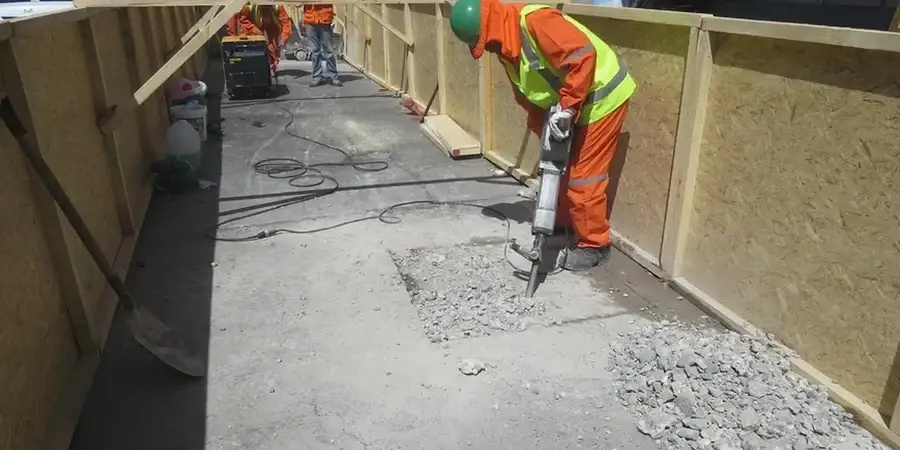
We approach every slope assessment by mapping these hydrogeological triggers first. A desk study of Quaternary sediments in the Cork City hinterland often reveals relict shear surfaces that predate the last glaciation. Before finalising a foundation scheme on the city's northern slopes, we typically recommend integrating findings from a test pit programme to verify the depth to bedrock and identify perched groundwater lenses that standard borehole logs might miss.

A slope that has stood for decades can fail in a single wet winter once the weathered zone loses suction and effective cohesion collapses.
Our service areas

Our approach and scope

The most frequent mistake we see on Cork sites is assuming that a slope which has stood for fifty years is inherently stable. The weathered mudstone of the Ballytrasna Formation can hold a steep face through summer only to undergo progressive softening when the autumn rains saturate the upper two metres. That softening reduces the effective cohesion by half in a matter of weeks.

Our analysis follows Eurocode 7 (EN 1997-1:2004) Design Approach 1, which demands both factor-of-safety verification and a separate check using partial factors on actions and material strengths. We run Spencer and Morgenstern-Price limit equilibrium routines because the non-circular failure surfaces common in Cork's layered drift deposits render simpler Bishop analyses unconservative. The output drives reinforcement specifications, drainage arrays, and phasing of earthworks.
Slope Stability Analysis in Cork: Managing the River Lee Valley's Geotechnical Challenges
Technical reference — Cork

Site-specific factors

In 2023 we reviewed a site on the southern flank of the Lee Valley where a developer had excavated a 9-metre cut into glacial till to prepare a platform for a three-block apartment scheme. The original ground inclined at 28 degrees, and the designer had assumed a simple drained friction angle of 32 degrees without accounting for the till's well-documented strain-softening behaviour.

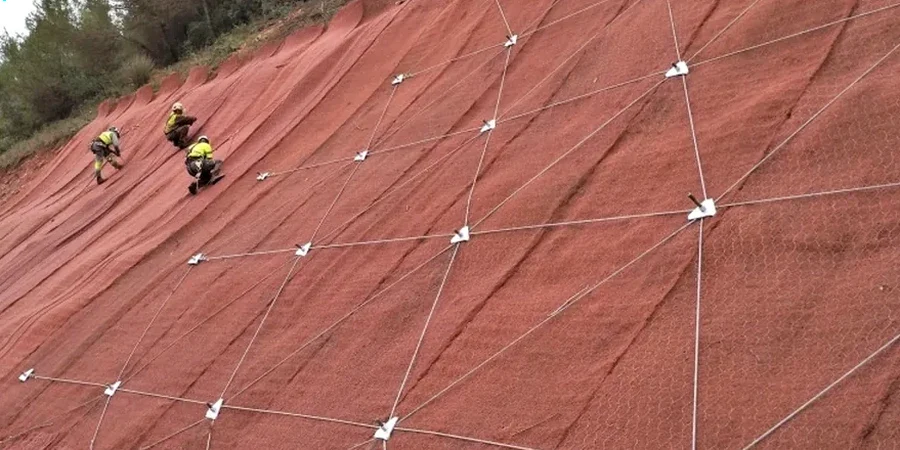
Within four months of the cut being opened, a tension crack propagated along the crest and the face began to slough after every significant rain event. Our back-analysis using Spencer's method confirmed the factor of safety had dropped below 1.0 under the elevated pore pressures measured by standpipe piezometers. The remediation required a combination of soil nailing and horizontal drains to re-establish an acceptable margin, delaying the project by eight weeks. That case illustrates what happens when a slope study relies on textbook parameters instead of site-specific measurement.

Need a geotechnical assessment?

Reply within 24h.

Email: contact@geotechnical-engineering.co

Video overview

Applicable standards

I.S. EN 1997-1:2005 Geotechnical design – General rules (including Irish National Annex), I.S. EN 1997-2:2007 Ground investigation and testing, I.S. EN 1998-1:2005 Design for earthquake resistance (seismic slope stability provisions), CIRIA C718 (2013) Guidance on embedded retaining wall design, ISRM suggested methods for rock slope characterisation

Reference parameters

ParameterTypical value
Analysis methodsSpencer, Morgenstern-Price, Janbu (non-circular surfaces)
Design standardEurocode 7 (EN 1997-1:2004), I.S. EN 1997-1:2005 National Annex
Factor of safety threshold1.25–1.40 depending on consequence class (CC2/CC3)
Pore-pressure modellingRu coefficient, phreatic surface interpolation, steady-state seepage
Material modelsMohr-Coulomb with tension cutoff; Hoek-Brown for rock slopes
Seismic coefficient (kh)0.05–0.10 per I.S. EN 1998-1:2005 for Cork region seismicity
Output deliverablesStability report, cross-sections, reinforcement schedules, monitoring plan

Frequently asked questions

What does a slope stability analysis cost for a typical Cork residential site?

For a single residential plot on a sloping site in areas like Douglas or Montenotte, a complete analysis — including site inspection, limit equilibrium modelling, and a report with recommendations — typically ranges from €1,290 to €4,350 depending on slope height and the complexity of the ground profile.

Which design approach from Eurocode 7 do you apply to Cork slopes?

We apply Design Approach 1 (DA1) as specified in the Irish National Annex to I.S. EN 1997-1. This requires two separate sets of partial factors: Combination 1 for structural actions and Combination 2 for ground parameters. Both must yield an acceptable factor of safety before the design is signed off.

How do you account for Cork's high rainfall in the analysis?

We model a worst-case phreatic surface calibrated against local piezometric records, often assuming full saturation of the upper weathered zone during January conditions. Pore-pressure ratios (Ru) are assigned per stratigraphic unit, and sensitivity checks are run at Ru values 10–15 percent above the best-estimate to capture the effect of prolonged wet weather.

Can you analyse a slope that has already started to fail?

Yes. Back-analysis of an active failure is one of the most reliable ways to constrain shear strength parameters. We survey the failure geometry, install piezometers to measure the pore-pressure regime at the time of collapse, and then iterate the limit equilibrium model until the computed factor of safety equals unity. That calibrated model then underpins the remediation design.

Do Cork County Council planning applications require a slope stability report?

For any development on ground steeper than approximately 1:6 (about 10 degrees) or within 30 metres of a riverbank, the planning authority generally expects a geotechnical risk assessment addressing slope stability. Cork City Council's development plan specifically flags lands along the Lee and its tributaries as requiring such assessments.

Location and service area

We serve projects in Cork and surrounding areas.

View larger map