GEOTECHNICAL ENGINEERING
CORK
HomeFoundationsRaft/mat foundation design

Raft Foundation Design in Cork: When Ground Conditions Demand a Single Slab

Geotechnical engineering with regional judgment.

LEARN MORE

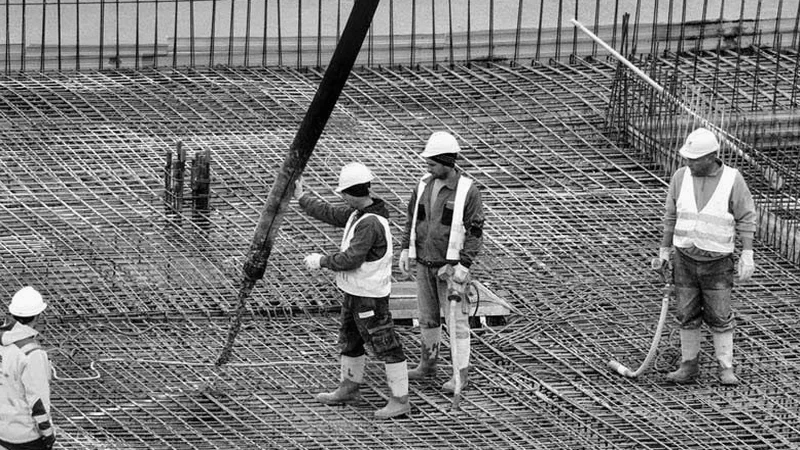
In Cork, you learn quickly that the ground under the city centre isn't just one thing. The River Lee has shaped a valley of alluvial silts and soft clays, and beneath that lies Carboniferous limestone with a reputation for karstic voids. When a developer near the South Docks showed us their borehole logs last year, the alternating layers of river gravel and peat told the whole story: isolated footings were out of the question. A full-footprint raft foundation became the only practical path. We design these reinforced concrete slabs to spread structural loads across the entire building plan, turning a problematic soil profile into a manageable engineering problem. This approach often eliminates the need for deep piles in areas where limestone bedrock is irregular, while still providing the uniform support that mid-rise commercial blocks demand. For projects near the Mardyke or further out in Douglas, combining the raft assessment with in-situ permeability testing gives us the drainage parameters we need to model long-term settlement under saturated conditions.

On Cork's river silts, a well-designed mat foundation can halve the settlement that isolated footings would experience, without the cost of deep piling.
Our service areas

Our approach and scope

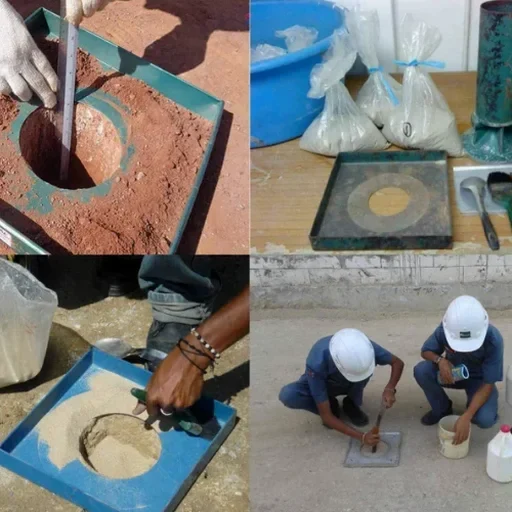
The glacial till that caps the ridges around Cork city behaves very differently from the estuarine deposits in the valley floor. Where the till is dense and gravelly, a mat foundation might be over-designed, but step a hundred metres closer to the river and the soil consistency changes entirely. Our design process starts with a detailed ground investigation, pulling undisturbed Shelby tube samples and running consolidation tests to measure the compression index of each soft layer. We model the raft as a plate on an elastic subgrade, calibrating the modulus of subgrade reaction from plate load data rather than textbook correlations. This is critical on Cork's mixed soils, where a generic k-value leads to either excessive slab thickness or under-predicted differential settlement. We also run the structural analysis for punching shear at column connections and check the mat's rigidity against the recommendations of Eurocode 7, ensuring the foundation-soil interaction is captured correctly. For heavy warehouse slabs in the Blarney Business Park area, we size the raft thickness and reinforcement to handle both the static racking loads and the dynamic forces from forklift traffic, integrating the floor slab and foundation into one efficient structural element.
Raft Foundation Design in Cork: When Ground Conditions Demand a Single Slab
Technical reference — Cork

Site-specific factors

A four-storey apartment block near the Tramore Valley had been designed with strip footings, based on an old site investigation that missed a lens of organic silt at 3 metres depth. The contractor called us when the first excavation walls started slumping inward. This is the scenario that keeps developers awake: differential settlement causing diagonal cracking through the superstructure before the building is even handed over. In Cork's river valley, buried peat pockets and soft silty clays are common, and they compress significantly under load. A raft foundation bridges these weak spots, distributing the building's weight so that no single soft pocket takes a concentrated load. The worst outcome isn't just the cost of repair; it's the delay, the structural warranty disputes, and the damage to a contractor's reputation. We've seen the same risk on brownfield sites near the old railway lines, where backfilled ground contains everything from demolition rubble to timber. A properly engineered mat foundation, designed with the actual compressibility parameters from our accredited lab, turns this unpredictable ground into a predictable bearing surface.

Need a geotechnical assessment?

Reply within 24h.

Email: contact@geotechnical-engineering.co

Video overview

Applicable standards

I.S. EN 1997-1:2004 + Irish National Annex, I.S. EN 1992-1-1:2004 (Concrete structures), I.S. EN ISO 17892 series (Geotechnical laboratory testing), I.S. EN 1990:2002 (Basis of structural design), Building Control (Amendment) Regulations (BCAR) 2014

Reference parameters

ParameterTypical value
Concrete strength class (min)C30/37 (exposure XC2)
Subgrade reaction modulus (k)Calibrated via in-situ plate load test
Settlement analysis method1D consolidation (oedometric) + FEM for complex geometries
Reinforcement gradeB500B ribbed bars to I.S. EN 10080
Minimum slab thickness250 mm for lightly loaded, 600+ mm for multi-storey
Applicable EurocodeI.S. EN 1997-1:2004 (Geotechnical design)
Karst mitigation measureGeogrid-reinforced raft with void-tolerant design where necessary

Frequently asked questions

What is the typical cost of a raft foundation design in Cork?

For a residential or small commercial project, the engineering design for a mat foundation in Cork generally falls between €960 and €4,350, depending on the building footprint and ground complexity. A site with highly variable river deposits and karst features requires more analysis hours and lab testing than a site on uniform glacial till.

When is a raft foundation better than piles in Cork?

A raft foundation often makes sense when the competent limestone bedrock is deep or highly irregular, as is common in parts of the Lee valley. Instead of expensive drilling through karst, the raft spreads the load over the upper soil layers. It also works well where the building has a basement, since the raft slab doubles as the basement floor, providing both structural support and a waterproof barrier.

How do you verify the ground can support a mat foundation?

We carry out a programme of site investigation including boreholes to depth, followed by laboratory consolidation and strength tests on the soil samples. The results feed into settlement calculations under the raft's design pressure. On critical projects, we may also run a plate load test at formation level to directly measure the subgrade reaction modulus before pouring concrete.

What is the difference between a raft foundation and a standard slab-on-grade?

A slab-on-grade or ground-bearing slab carries its own self-weight and imposed floor loads directly to the ground. A raft foundation, by contrast, is a structural mat designed to carry the entire building load—columns, walls, and lifts—and distribute it uniformly to the soil. Rafts are thicker, more heavily reinforced, and are designed to control differential settlement across the whole footprint, not just support a floor.

Location and service area

We serve projects in Cork and surrounding areas.

View larger map