GEOTECHNICAL ENGINEERING
CORK
HomeUnderground ExcavationsGeotechnical design of deep excavations

Geotechnical Design of Deep Excavations in Cork: Managing Soft Ground and Urban Constraints

Geotechnical engineering with regional judgment.

LEARN MORE

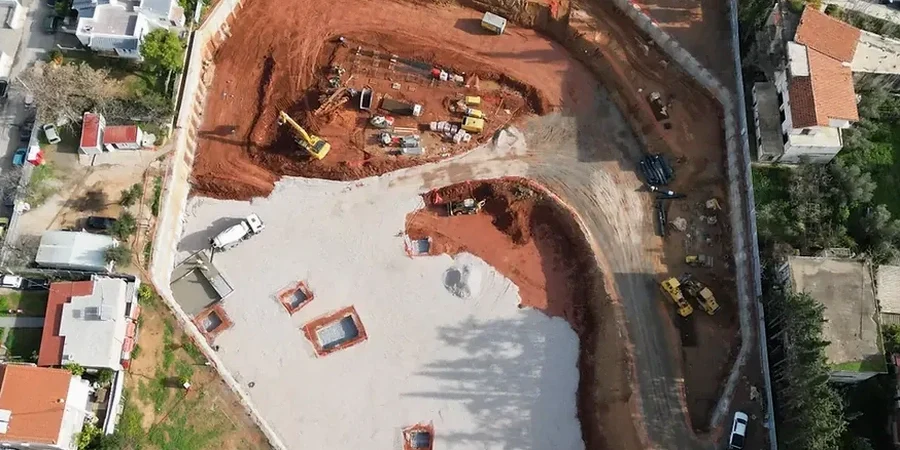
We recently completed the enabling works design for a multi-storey apartment block on a tight site near the South Mall, right where the historic quay walls meet the modern city grid. The developer needed to go three basement levels down, but the ground investigation showed we were sitting on a deep sequence of soft estuarine silts and clays typical of the River Lee floodplain. You cannot just open-cut that kind of material and hope for the best. The water table in Cork sits barely two metres below street level in many central areas, and the surrounding 19th-century masonry buildings have zero tolerance for movement. This is exactly the scenario where a solid deep excavation design becomes the single most critical document before a shovel ever hits the ground. Getting the temporary works sequence wrong here doesn't just cost money—it can trigger a cascade of settlement damage across an entire block. Our role is to define the support system, predict the ground movements, and give the contractor a clear, buildable sequence that keeps the hole open safely for months of construction.

A deep excavation in Cork's soft Lee alluvium is a groundwater problem first and a structural problem second.
Our service areas

Our approach and scope

The design methodology we apply follows Eurocode 7 (IS EN 1997-1:2004) with the Irish National Annex, which mandates a serviceability limit state check for adjacent structures that goes well beyond a simple factor of safety. In Cork, the default assumption has to be that the ground profile is highly variable. You might hit gravel lenses from the old river terraces, then transition into a pocket of peat, all within the same excavation face. For that reason, our analysis always ties back to a CPT test campaign to get a continuous profile of tip resistance and pore pressure. We model the retaining wall—often a secant pile wall or sheet pile system—using finite element software that accounts for the non-linear stiffness of the glacial till and the underlying limestone bedrock. The connection detail between the props and the waling beam gets a disproportionate amount of attention in our office; a localised bearing failure at that interface has caused more than one excavation collapse in Ireland. We also integrate the groundwater cut-off design, specifying the toe level of the wall to control seepage into the formation, because the operational cost of dewatering a failed cut-off in Cork's permeable alluvium can bankrupt a project budget before the slab is even poured.
Geotechnical Design of Deep Excavations in Cork: Managing Soft Ground and Urban Constraints
Technical reference — Cork

Site-specific factors

Cork's climate is a game of inches when you are managing a deep dig. The city gets around 1,200 mm of rain a year, spread evenly enough that you rarely get a fully dry construction season. A week of Atlantic fronts rolling in from the southwest can raise the groundwater overnight, saturating the retained soil mass behind your wall and increasing the effective pressure by up to 20% compared to the drained condition you assumed in the office. That is why we treat the short-term undrained analysis as the governing case for the temporary stage, particularly in the laminated silt clays where the undrained shear strength can drop below 30 kPa. The other risk we see repeatedly is unrecorded buried services and old basement structures in the city centre; a sheet pile hitting a granite foundation from an 18th-century warehouse can stall a job for three weeks. We mitigate this by specifying a detailed seismic refraction survey along the wall alignment before the piling rig moves in, which flags hard obstructions and sudden changes in bedrock profile. Without that step, you are effectively designing blind.

Need a geotechnical assessment?

Reply within 24h.

Email: contact@geotechnical-engineering.co

Applicable standards

IS EN 1997-1:2004 (Eurocode 7: Geotechnical design – General rules), IS EN 1997-2:2007 (Eurocode 7: Ground investigation and testing), IS EN 1993-5:2007 (Eurocode 3: Design of steel structures – Piling), IS EN 1536:2010+A1:2015 (Execution of special geotechnical work – Bored piles), Specification for Highway Works (TII Publications)

Reference parameters

ParameterTypical value
Maximum excavation depth typically designedUp to 15 m below street level
Typical retaining wall typesSecant pile, sheet pile, diaphragm wall
Groundwater control methodImpermeable wall toe + active dewatering
Design standardIS EN 1997-1:2004 + Irish National Annex
Settlement analysis criteriaAngular distortion < 1/500 for masonry
Soil-structure interaction modelHardening Soil with Small-Strain Stiffness
Typical bedrock depth in Cork Basin5 to 20 m below ground level

Frequently asked questions

What is the typical cost range for a deep excavation design package in Cork city?

For a complete design package covering the retaining wall, propping, dewatering, and movement assessment, the fee typically ranges from €1,660 to €7,410 depending on the excavation depth, complexity of the ground profile, and number of construction stages. A simple single-level basement on a greenfield site sits at the lower end, while a multi-level dig adjacent to protected structures in a floodplain requires considerably more analysis and falls at the upper end.

How do you prevent damage to neighbouring buildings during a deep dig in a dense urban area like Cork city centre?

We implement a rigorous observational method. First, we model the excavation using small-strain stiffness parameters to avoid over-predicting movements. Then we define trigger levels for settlement and vibration at each adjacent structure, linked to a contingency plan. If monitoring shows the retaining wall deflection approaching the design envelope, we can activate additional props or switch from passive to active anchors. The key is having the contingency designed in advance, not improvising under pressure.

How long does the design process take from ground investigation to issuing construction drawings?

A realistic timeline is four to six weeks from the moment we receive a complete ground investigation report. The first two weeks focus on building the 3D geotechnical model and selecting the wall type. The next two to three weeks cover the detailed finite element analysis, prop sizing, and connection design. The final week is for peer review and coordination with the permanent works designer. If the investigation data is incomplete, the timeline extends significantly.

Location and service area

We serve projects in Cork and surrounding areas.

View larger map